
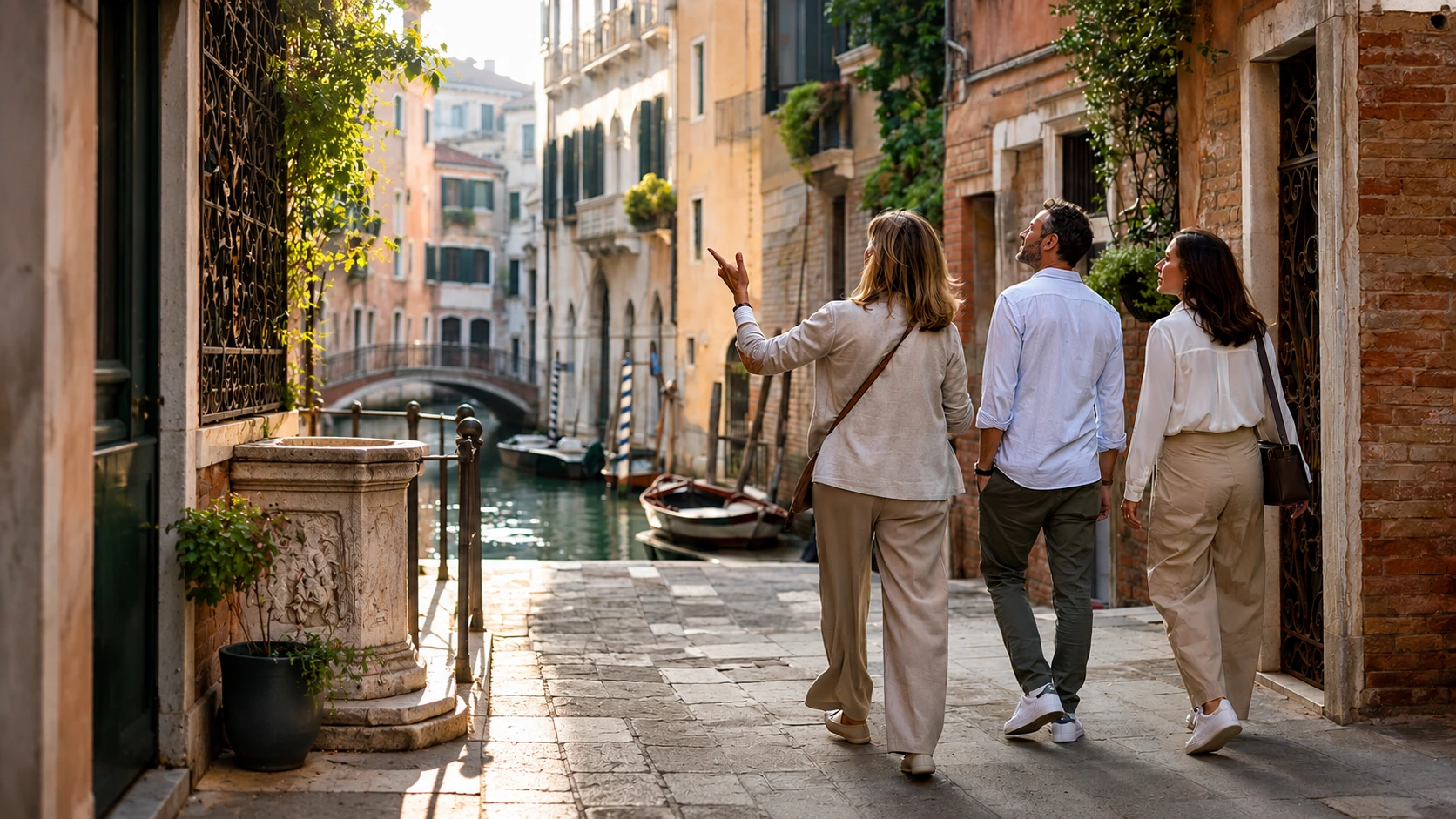
Venice is not a city you simply "figure out" in the same way as many other European destinations. There are no cars, streets often change direction without warning, bridges shape every route, and the shortest path on a map is not always the easiest path on foot.
That is why an orientation walk on your first day can be one of the smartest things to book. It gives you a practical map of the city in your head before you start filling your days with museums, islands, restaurants and walks.
What is an orientation walk?
An orientation walk is not a heavy history lecture and not a rushed sightseeing checklist. It is a practical introduction to how Venice works: where you are, how the main areas connect, how to move around, where the busiest routes are and which quieter alternatives make sense for your stay.
The goal is simple: after the walk, Venice should feel less confusing and more usable.
Why the first day matters
If you book orientation at the end of your trip, you may enjoy it, but you have already spent most of your time making decisions without that knowledge. On the first day, the same advice becomes more valuable because you can use it immediately.
You can choose better walking routes, avoid repeating the same crowded streets, understand when to visit certain areas and plan the rest of your stay with more confidence.
First Steps in Venice is designed as a compact first-day private walk with orientation, local tips and tailored suggestions for the rest of your stay.
You get a mental map, not just directions
A phone map can tell you where to turn. It cannot explain why one bridge is always crowded, why another route feels calmer, or which district is best for your evening walk. A guide helps you build a mental map made of landmarks, canals, bridges and neighborhoods.
That mental map is useful for the whole trip. You stop feeling like every walk is a new puzzle and begin to recognize the city by area and atmosphere.
You learn how to move through Venice
Moving through Venice is part walking, part timing and part water transport. An orientation walk can explain when walking is simpler, when the vaporetto makes sense, how to think about bridges and why some routes are beautiful but tiring with luggage or in midday crowds.
This is especially useful if you are staying for more than one night, planning island visits, or moving between San Marco, Rialto, Cannaregio, Dorsoduro and the station area.
You avoid common first-day mistakes
Many visitors spend their first hours following the densest line between the station, Rialto and San Marco. It is understandable, but it can create a stressful first impression. Venice has famous places for a reason, yet the best first day usually balances them with quieter corners.
A local guide can help you avoid three common mistakes: trying to see too much immediately, eating or stopping only where the crowd stops, and judging Venice only by its busiest streets.
You can ask practical questions in real time
The best first-day questions are often very practical. Which area is good tonight? How early should we go to San Marco? Is this route stroller-friendly? Where can we walk after dinner? Does it make sense to visit Murano and Burano on the same day?
Online guides can answer some of this, but a private orientation walk lets you ask based on your hotel location, travel style, energy level and interests.
Who benefits most from a first-day orientation walk?
- First-time visitors who want Venice to feel manageable quickly.
- Couples who want a calm start instead of a crowded checklist.
- Families who need realistic routes, breaks and simple logistics.
- Short-stay travelers who cannot afford to lose half a day getting oriented.
- Curious visitors who want local context before exploring alone.
What should you do after the walk?
Use the walk as a launch point. After it, choose one nearby area to explore slowly instead of rushing across the city. If your guide gives you a dinner or sunset suggestion, follow it while the route is still fresh in your mind.
The next day, build on what you learned: visit a major sight early, take a quieter route back, or choose a deeper private tour if you want more local stories and hidden corners.
How orientation connects to other Tolomazia tours
If you want the simplest start, book First Steps in Venice. If you already feel comfortable and want a richer route, move to Venice Highlights & Hidden Corners. If you want to understand the full city by district, choose the Six Sestieri Discovery Walk.
Think of orientation as the first layer. It gives you the confidence to enjoy everything else more.