
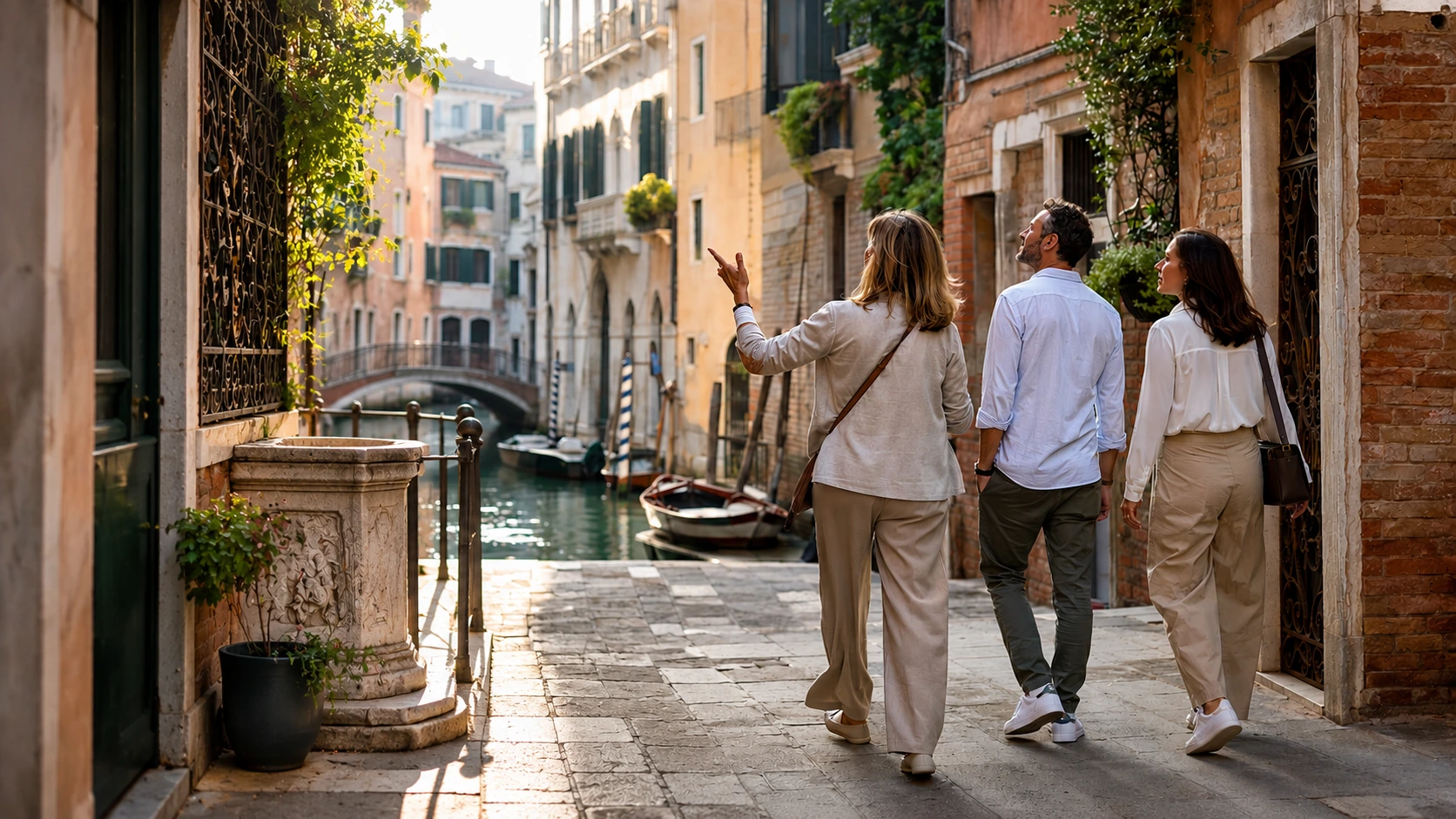
Venice is beautiful, but it can be disorienting on a first visit. Streets change direction, bridges interrupt routes, water buses take longer than expected and the most famous areas can become crowded quickly.
The good news: your first day does not need to be complicated. With a few smart choices, Venice becomes easier, calmer and much more enjoyable.
Start by understanding the city, not by chasing every landmark
Many first-time visitors rush straight to Rialto and St. Mark's. Those places are worth seeing, but if you start with the busiest route, Venice can feel like a crowd management exercise.
Instead, spend your first hour understanding the basics: where you are staying, which sestiere you are in, how bridges affect walking time, and which routes are pleasant at different hours.
Learn the six sestieri early
Venice is divided into six districts called sestieri. You do not need to memorize every street, but knowing the mood of each area helps immediately:
- San Marco: famous, monumental and busiest.
- San Polo: central, dense and close to Rialto.
- Cannaregio: lived-in, atmospheric and good for slower wandering.
- Dorsoduro: art, views and a more relaxed rhythm.
- Castello: local-feeling streets and quieter corners.
- Santa Croce: practical, connected and often overlooked.
If you want Venice to make sense quickly, start with a private orientation walk. It helps you understand routes, timing and what to do next.
See First Steps in VeniceWhat to do first in Venice
For most first-time visitors, the best first activity is a compact walking orientation. It does not need to be long. It should help you answer practical questions: where to walk, when to visit famous places, how to use water transport and what areas fit your style.
After that, choose one major sight or one neighborhood to explore slowly. Venice rewards attention more than speed.
What to avoid on your first day
Avoid overloading the first day with too many timed bookings. Travel delays, hotel check-in, luggage and navigation all take energy. If every hour is scheduled, the city starts to feel stressful.
Also avoid eating on the first obvious tourist street after a major landmark. Walk five or ten minutes away, look for a calmer campo and compare menus before deciding.
Do not trust walking time blindly
A map might say a destination is 12 minutes away, but bridges, crowds and wrong turns can change that quickly. Add extra time, especially before reservations, trains, guided visits or airport transfers.
This matters most around Rialto, St. Mark's and the main route between the station and the center.
Use the first evening wisely
Evening is often when Venice becomes easier to love. Day visitors leave, the light softens and many smaller canals become quiet. Instead of saving all your energy for the busiest daytime hours, plan a gentle evening walk.
If you visited San Marco during the day, return later from a quieter route. The same place can feel completely different.
A simple first-day Venice plan
- Morning or arrival: get oriented, understand your area and choose practical routes.
- Late morning: see one famous place, not all of them.
- Afternoon: explore a quieter sestiere or take a slower canal-side route.
- Evening: walk without a strict plan and let the city settle.
When to book help
If you only have one or two days, a private first-day walk can save you from common mistakes and help you use your time better. It is especially useful for couples, families and small groups who want the day adapted to their pace.
For a first trip, the goal is not to see everything. The goal is to understand enough that the rest of Venice opens up.